Case 01 · 2023 – 2026
MORFO
Teaching dental morphology in three dimensions.
- Role
- Unity Developer & Research Engineer
- Platforms
- Meta Quest 3 · iOS · Android
- Year
- 2023 – 2026
The brief
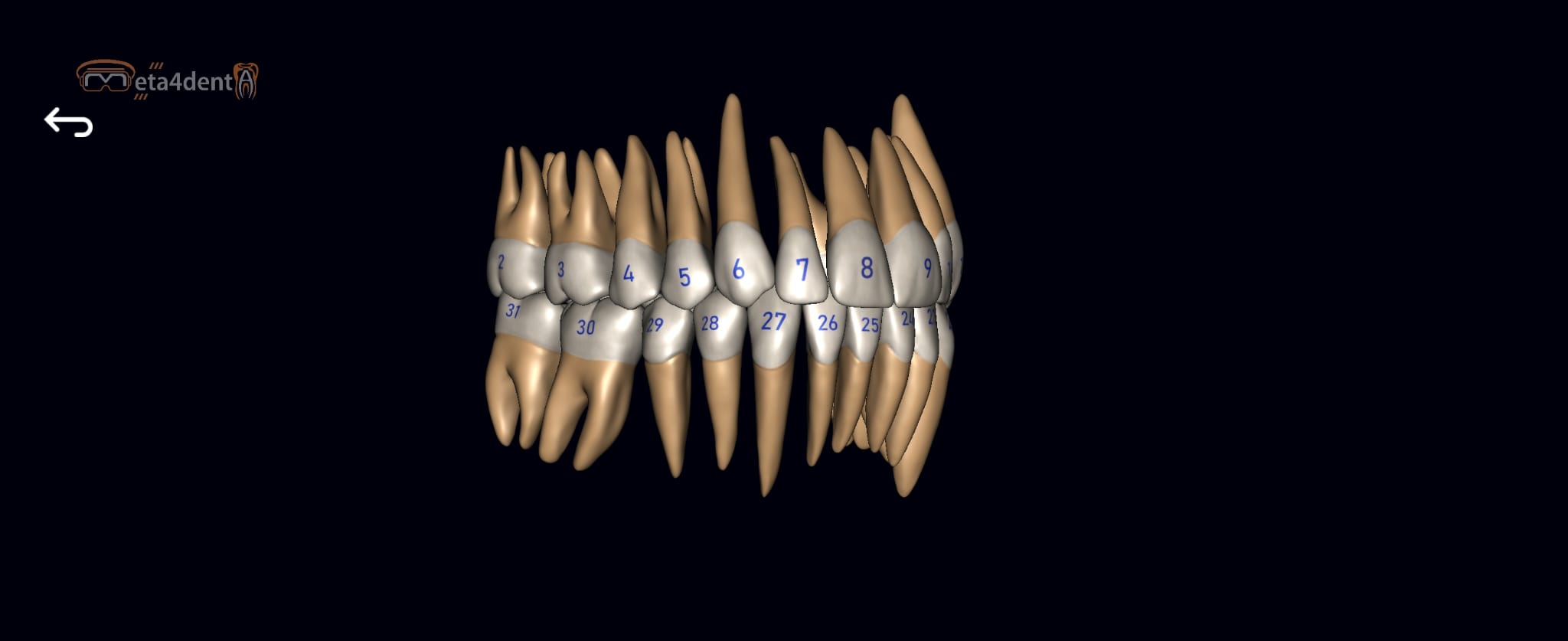
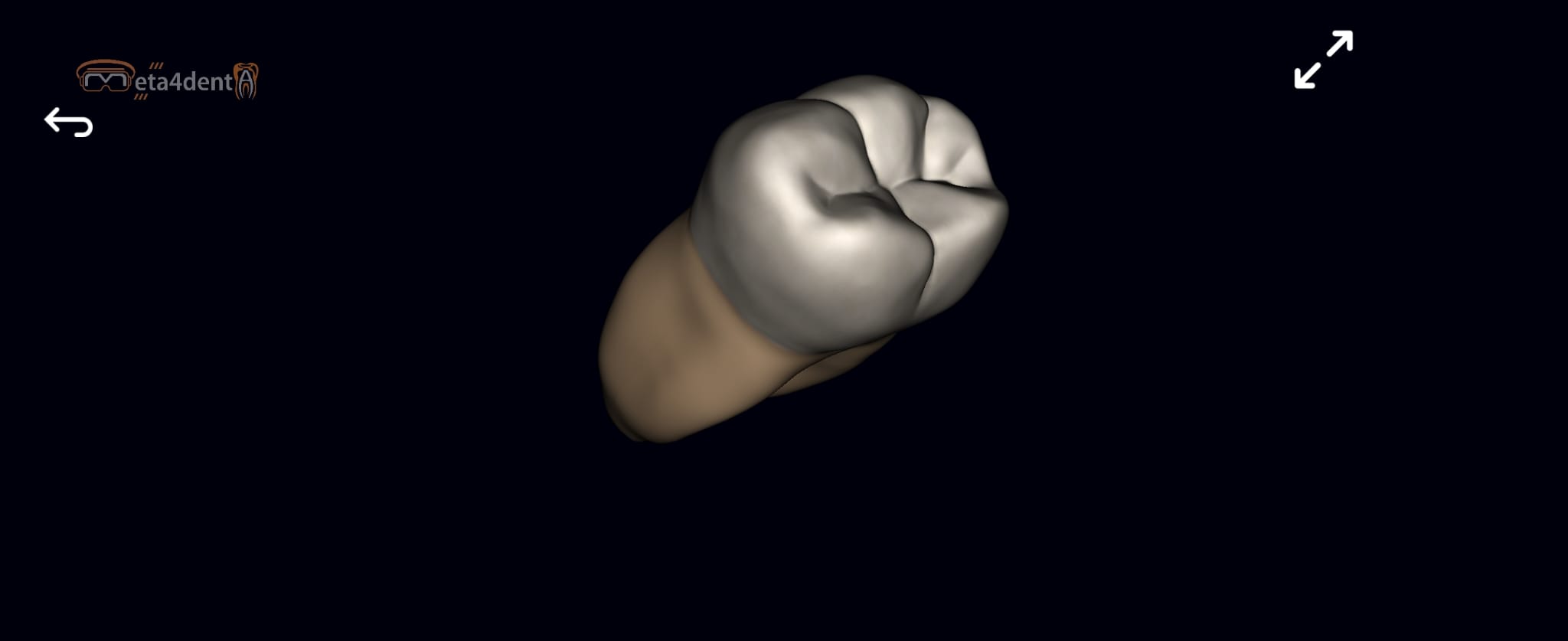
Dental morphology is traditionally taught from 2D atlases and plastic models. MORFO puts every tooth in the student's hands as an interactive 3D object — in VR on Meta Quest 3 or on the phone in their pocket — with gamified exercise modules so new content ships as data rather than code.
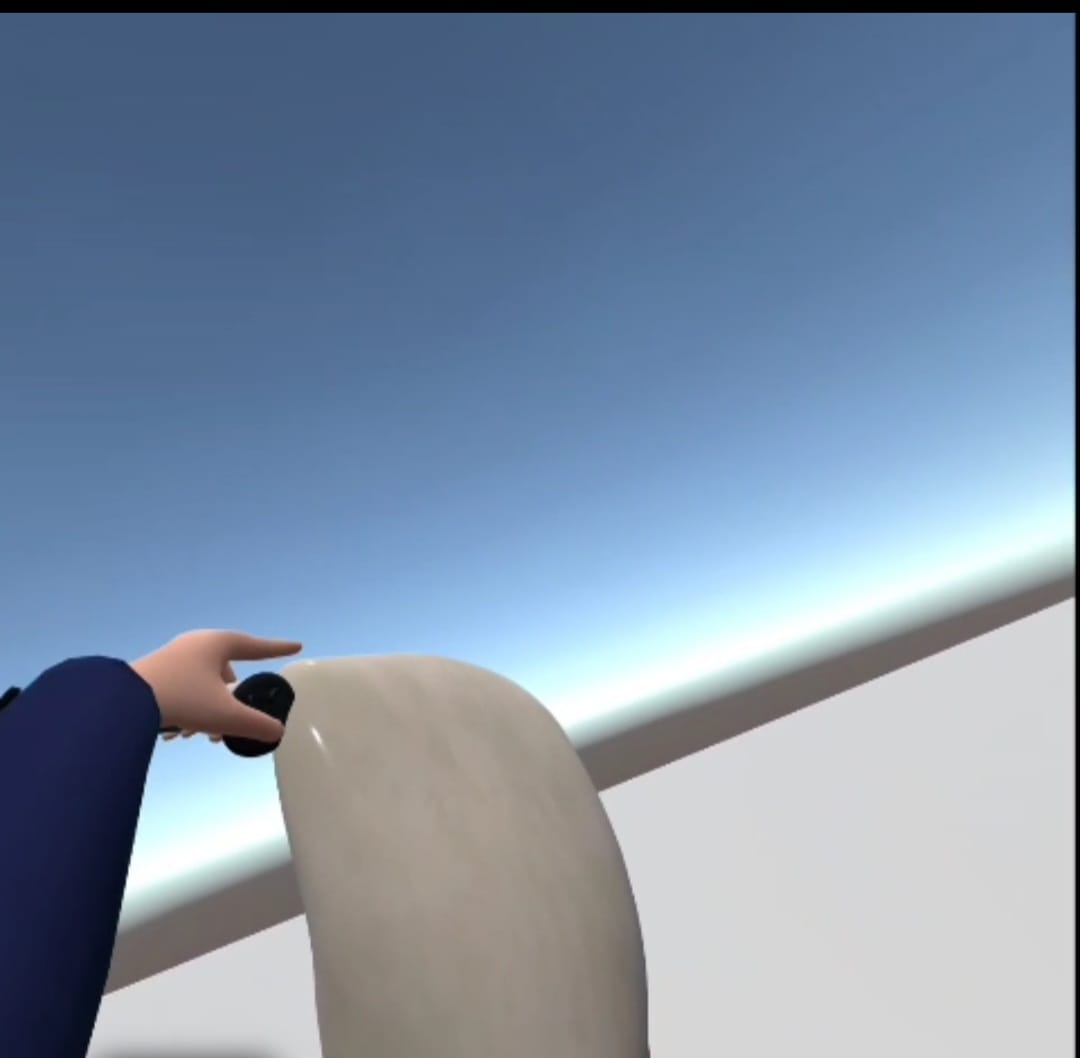
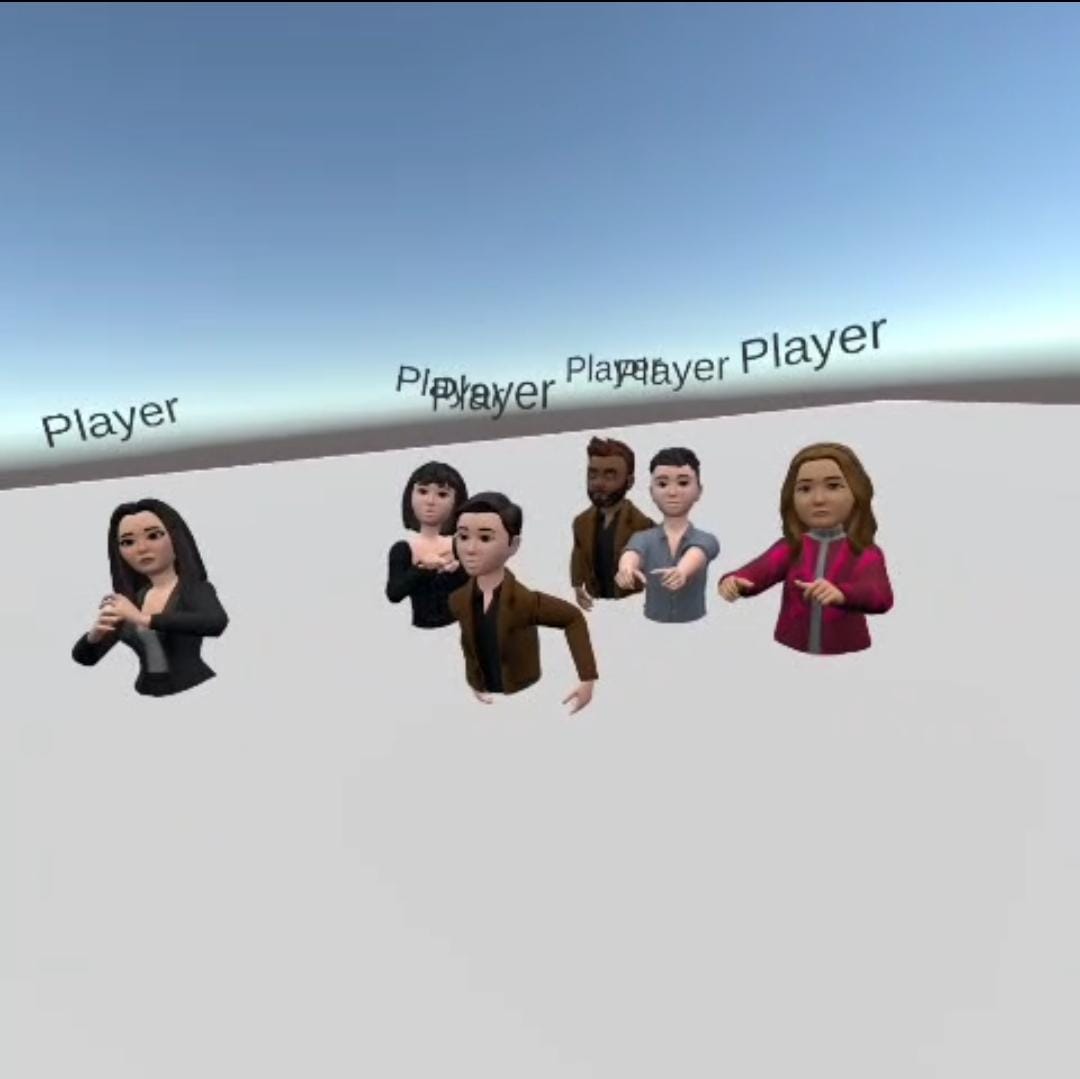
In VR, instructors and students meet in the same virtual classroom, embodied through networked avatars and spatial voice, while a Firebase backend keeps student progress and exercise state consistent across headset and phone. The platform is live on the App Store and Google Play as part of a dental training product line holding a 4.2-star average rating with 2,000+ active users, and a companion research paper is under review at the International Journal of Serious Games (IJSG).
The build
The project moved from concept to launch in five phases: mapping the dental curriculum into interactive 3D exercises with educators, designing a modular architecture with a unified cross-platform codebase tuned for mobile GPU constraints, building gamified content systems on ScriptableObjects, modular prefabs and Addressables, layering in multiplayer and backend services, and finally store submission with continuous live-ops tuning across the install base.
Multiplayer runs on Photon Fusion 2 Shared Mode — including a Fusion 1 to Fusion 2 migration on Meta Quest 3 — with Meta Avatar SDK v40 embodiment and spatial voice over Photon Voice 2. Firebase Auth, Firestore and Realtime Database drive progress tracking, room management and real-time data synchronization. The mobile roots enforced performance discipline: custom HLSL shaders, a dynamic LOD system and a custom URP rendering pipeline with careful batching and instancing hold 120+ FPS even on mid-range hardware.
- Photon Fusion 2 Shared Mode classrooms with Meta Avatar SDK v40 and spatial voice via Photon Voice 2
- Fusion 1 → Fusion 2 multiplayer migration on Meta Quest 3
- Firebase Auth, Firestore and Realtime Database sync exercise state across headset and phone
- Content-driven modules via ScriptableObjects, prefabs and Addressables — new teeth, quizzes and scenarios ship as data, not code
- Custom URP pipeline with optimized shader variants and dynamic LOD holds 120+ FPS on mid-range devices
- One unified codebase shipping to Meta Quest 3, iOS and Android
Numbers
- 4.2★
- Average store rating
- 2,000+
- Active users
- 120+ FPS
- On mid-range hardware
- 3
- Platforms from one codebase
Stack
- Unity
- C#
- Photon Fusion 2
- Photon Voice 2
- Meta Avatar SDK v40
- Firebase
- Addressables
- URP
- HLSL
Case 02 · 2022 – 2023
VR Neurosurgery Training
Simulating brain tissue in real time.
🏆 Best University Graduate Project 2023
- Role
- VR development lead
- Platforms
- Meta Quest · Standalone VR
- Year
- 2022 – 2023
The brief
An award-winning surgical training simulator built for an inter-university competition — real-time soft-body physics, accurate tissue deformation and bleeding mechanics for neurosurgery education. Recognized as Best University Graduate Project 2023.
Neurosurgery requires delicate handling of extremely soft brain tissue. The core challenge was to simulate non-linear soft-body deformation, incision and bleeding in real time on standalone VR hardware, where performance budgets are tight. Standard rigid-body physics were insufficient: a custom solution was needed to calculate vertex displacement from tool pressure without dropping below the critical 72 FPS threshold required for comfortable VR.
The build
The pipeline ran from scan to simulation: real patient MRI/CT scans were converted into optimized 3D meshes suitable for real-time deformation, then driven by a custom vertex-based deformation algorithm that lets the brain mesh compress and rebound realistically under tool pressure, mimicking the viscoelastic properties of organic matter. A particle-based bleeding system reacts to incision depth and location, with suction-tool mechanics to clear the surgical field.
A full suite of interactive surgical instruments — scalpels, forceps, bipolars, suction tools and microscopic cameras — was programmed with tool-specific collision logic, haptic feedback profiles and sound. Hand-tracking and controller interactions were designed for precision surgical tasks, rendering was tuned for stereoscopic VR depth perception, and the simulator was calibrated through user testing with medical students and neurosurgeons.
- Custom vertex-based soft-body deformation simulating viscoelastic brain tissue under tool pressure
- Holds the 72 FPS VR comfort threshold on standalone Meta Quest hardware
- Anatomy derived from real patient MRI/CT scans, converted to deformation-ready meshes
- Particle-based bleeding reacting to incision depth and location, cleared via suction-tool mechanics
- Instrument suite (scalpels, forceps, bipolars, suction) with per-tool collision logic, haptics and sound
- Realism calibrated through user testing with medical students and neurosurgeons
Numbers
- 72 FPS
- VR comfort target
- 2023
- Best University Graduate Project
- 5
- Process stages, scan to simulation
Stack
- Unity
- C#
- HLSL
- Custom physics
- Meta Quest
Case 03 · 2024–2025
Aston Martin VR HMI
Validating luxury UX without a physical car.
- Role
- Product Design Engineer
- Client
- SIMUX Defence (for Aston Martin Lagonda)
- Platforms
- HP Reverb · Varjo · PC VR
- Year
- 2024–2025
The brief
Designing HMI for luxury vehicles normally requires expensive physical bucks and slow iteration cycles. Aston Martin needed a way to validate digital-cockpit concepts and ergonomics for the Lagonda rapidly, with teams distributed across the UK and Europe.
The challenge was to build a photorealistic VR prototype that allowed multiple engineers to sit in the same virtual car, interact with the dashboard, and analyze driver attention — all in real time, all synchronized. The system became a design tool: menu hierarchies were validated, interaction flows refined, and UI state machines tested before a single line of production vehicle code was written.
The build
The pipeline ran from Figma to VR: dashboard interfaces and interaction flows were designed in Figma as the ground truth, then CAD models were imported into Unity, a VR interaction rig was set up, and the Figma specs were ported into runtime UI. Photon Fusion handled multiplayer state synchronization so designers and engineers could inhabit the same virtual vehicle, point at features, and discuss HMI changes regardless of location, with Photon Voice providing in-cabin chat.
Hardware eye-tracking on HP Reverb and Varjo headsets captured gaze data and surfaced it as live heatmaps, with time-to-fixation metrics validating attention patterns, information hierarchy and interaction flows during multi-user stakeholder reviews. Real-time vehicle telemetry was integrated via CAN Bus protocols, driving a fully functional virtual dashboard where physical inputs trigger real UI states, rendered through custom HLSL shader effects on the instrument cluster displays. Unity HDRP delivered photorealistic leather, carbon fiber and glass so the prototype matched the luxury aesthetic of the final product.
- Multiplayer co-location over Photon Fusion — distributed teams sit in the same virtual car in real time
- Live eye-tracking heatmaps and time-to-fixation metrics on HP Reverb and Varjo hardware
- CAN Bus telemetry triggers real UI states on the virtual instrument cluster via custom HLSL shaders
- Unity HDRP photoreal materials: leather, carbon fiber and glass matching the production luxury aesthetic
- Figma-to-Unity pipeline porting design specs directly into runtime VR UI
- Photon Voice in-cabin chat for multi-user design reviews across the UK and Europe
Stack
- Unity HDRP
- HLSL
- CAN Bus
- Photon Fusion
- Photon Voice
- Figma
- Eye-tracking
Case 04 · 2023
TMJ Simulation System
Bridging digital simulation & physical touch.
🏆 Study presented at the International Eastern Conference on Human-Computer Interaction (HCI 2023)
- Role
- Software engineer · XR systems
- Platforms
- Windows · Phantom/Geomagic haptic devices
- Year
- 2023
The brief
Temporomandibular joint (TMJ) disorders require extremely precise surgical interventions. The challenge was to create a mixed reality surgical training simulation that not only looked photorealistic but felt physically accurate to the surgeon's hand — integrating real-time biomechanical modeling with native haptic feedback at sub-10 ms latency.
Standard game engines like Unity update physics at 60–90 Hz, but realistic haptic feedback demands a loop running at 1 kHz; any drop in frequency produces stair-stepping or vibration artifacts that break immersion and ruin training value. The accompanying study, "A Temporomandibular Joint Course with Metaverse Experience", was presented at the International Eastern Conference on Human-Computer Interaction (HCI 2023).
The build
The solution was a hybrid architecture that bypassed the engine where it mattered: critical physics runs in unmanaged C++ memory space while visual updates synchronize to Unity's managed environment — no garbage-collection spikes, no force-feedback dropouts, and indistinguishable-from-reality tool resistance. Native C++ DLLs communicate directly with Phantom/Geomagic hardware, sustaining a stable 1 kHz force-feedback loop, bridged to Unity via P/Invoke marshalling with careful allocation patterns.
The pipeline started with biomechanical research into jaw kinematics and soft-tissue resistance data, which informed mathematical models of mandibular movement that constrain the virtual jaw to anatomical limits and simulate the elasticity of ligaments and muscle tissue. Custom HLSL subsurface-scattering shaders simulate how light penetrates translucent oral tissue, scatters internally and exits elsewhere, giving the flesh its characteristic waxy look. The system was calibrated with the haptic devices and tested for clinical accuracy against physician reference.
- Sub-10 ms haptic latency with a stable 1 kHz force-feedback loop
- Native C++ DLLs talk directly to Phantom/Geomagic hardware, bypassing Unity's 60-90 Hz physics
- Hybrid architecture: unmanaged C++ physics decoupled from Unity's managed visuals - no GC spikes
- P/Invoke engine bridge with careful allocation patterns to prevent garbage-collection stalls
- Custom HLSL subsurface-scattering shaders for realistic translucent oral tissue
- Biomechanical mandibular models constrain the virtual jaw to anatomical limits, simulating ligament and muscle elasticity
Numbers
- 1 kHz
- Force-feedback loop
- <10 ms
- Haptic latency
- 60-90 Hz
- Standard engine physics it bypasses
Stack
- Unity
- C++ (native DLLs)
- HLSL
- P/Invoke
- Phantom/Geomagic
- Windows
Case 05 · 2026 – Ongoing
Digital Twin MR System
Physical interfaces for virtual diagnostics.
- Role
- XR Systems & Hardware Engineer
- Platforms
- Meta Quest 3 · Custom Hardware
- Year
- 2026 – Ongoing
The brief
Interacting with complex 3D medical datasets like MRI and CT scans in virtual space is cumbersome with standard controllers. The challenge was to bridge the tactile precision of a physical control panel with the infinite bounds of spatial computing.
The project pairs a Meta Quest 3 application with a bespoke Arduino Uno and ESP32-based hardware control panel that communicates wirelessly with the headset. Sensors, dials, and physical inputs translate directly into manipulation of volumetric medical imagery, and networked users can collaboratively inspect, slice, and interact with the data — enabling remote surgical planning and educational simulations.
The build
The hardware-to-software bridge began with prototyping the physical panel around Arduino Uno and ESP32 microcontrollers, then establishing a low-latency bidirectional serial data flow between the physical sensors and the Unity simulation via a wireless ESP32 bridge. Panel states drive the virtual environment, while virtual simulation states can trigger physical feedback mechanisms in return.
On the software side, volume rendering techniques turn MRI/CT scan data into fully rotatable, sliceable 3D volumes inspectable in real time from any angle. Photon Fusion 2 provides the multiplayer architecture, instantly synchronizing dense volumetric data states and hardware inputs across a shared multi-headset XR session.
- Custom Arduino Uno + ESP32 control panel wirelessly drives a Meta Quest 3 app
- Bidirectional real-time serial comms: panel states affect VR, simulation states trigger physical feedback
- MRI/CT data rendered as rotatable, sliceable 3D volumes in Unity
- Photon Fusion 2 syncs volumetric states and hardware inputs across networked headsets
- Tactile multi-sensor interface beyond what standard VR controllers can mimic
Stack
- Unity
- Photon Fusion 2
- Arduino Uno
- ESP32
- Meta Quest 3
Case 06 · 2026 – Ongoing
MediBot AI Assistant
Multi-LLM powered clinical reasoning.
- Role
- Full-Stack Mobile Developer
- Platforms
- iOS · Android
- Year
- 2026 – Ongoing
The brief
Different Large Language Models excel at different tasks — some are better at parsing raw medical texts, others at conversational empathy or image analysis. The challenge was building an architecture that dynamically utilizes the right model for the right task.
MediBot is an AI-powered Turkish health assistant built on a sophisticated TypeScript backend routing layer, seamlessly connecting a Unity C# mobile client to OpenAI GPT, Anthropic Claude, and Google Gemini via strictly managed REST endpoints. A three-tier subscription system drives dynamic model routing, while Firebase Auth, Firestore persistence, and an image-analysis pipeline keep patient-level data secure while delivering instant, multi-model AI responses.
The build
The build started with backend orchestration: a TypeScript middleware layer that securely handles API keys and formats the diverse payloads each LLM provider expects. On the client, an async/await REST data pipeline in Unity (C#) handles JSON parsing without dropping framerates, keeping the mobile UI smooth during high-latency LLM generations. Firestore provides cross-session chat persistence and Firebase Auth handles secure user onboarding, with real-time state synchronization across devices.
Queries are intelligently dispatched to OpenAI, Anthropic, or Google APIs based on query context and the user's subscription tier — a dynamic three-tier monetization logic that also controls prompt token limits. A unified image-analysis pipeline lets users upload clinical documents or images, converting them into secure payloads for multi-modal AI vision processing.
- Multi-LLM routing dispatches queries to OpenAI GPT, Anthropic Claude, or Google Gemini by context and subscription tier
- TypeScript middleware layer secures API keys and normalizes diverse LLM payloads behind strict REST endpoints
- Non-blocking C# async/await networking in Unity keeps the mobile UI smooth during high-latency LLM generations
- Three-tier subscription logic dynamically controls prompt token limits and model routing
- Image-analysis pipeline converts clinical documents and photos into secure payloads for multi-modal vision processing
- Firebase Auth onboarding plus Firestore for cross-session chat persistence and real-time cross-device sync
Numbers
- 3
- LLM providers orchestrated
- 3-tier
- subscription-driven model routing
Stack
- Unity (C#)
- TypeScript
- REST APIs
- Firebase Auth
- Firestore
- OpenAI GPT
- Anthropic Claude
- Google Gemini
Case 07 · 2024
Bringing the Island to macOS.
A sleek, floating Dynamic Island-style music widget that displays and controls currently playing music from any app.
- Role
- macOS Developer
- Platforms
- macOS 13.0+ (Ventura)
- Year
- 2024
The brief
Apple's internal architectures for media control are tightly locked inside the Control Center. The challenge was to break those out into an independent, always-on-top, and aesthetically pleasing desktop widget.
The Dynamic Music Island is an expandable pill-shaped UI floating at the top of the monitor. Clicking the island expands it to reveal album art, playback controls, and animated sound waves moving in sync with the music.
The build
By tapping into the private macOS MediaRemote framework via @_silgen_name directives, the app captures real-time updates — identifying playing tracks on Apple Music, Spotify, and browsers without heavy polling. The detection engine listens to everything from Safari WebKit audio players to native Apple Music processes, parsing payloads for track, artist, and artwork metadata.
The window layer moves outside App Sandbox constraints to manipulate system window levels, keeping the pill always-on-top and globally draggable anywhere on screen. SwiftUI spring timing curves, gradient overlaps, and masked shapes recreate iOS-like spatial fluidity on the desktop, while AppleScript and Accessibility API fallbacks handle non-compliant apps like Spotify.
- Hooks the private MediaRemote framework via @_silgen_name for instant hardware-level playback callbacks
- Cross-app track detection (Apple Music, Spotify, browser WebKit audio) without heavy polling
- Always-on-top floating window manipulating system window levels outside App Sandbox constraints
- Spring-based SwiftUI animations for island expansion and music-synced sound wave visualizers
- AppleScript + Accessibility API fallback control layer for non-compliant apps like Spotify
- Globally draggable pill UI that expands to show album art and playback controls
Stack
- Swift
- SwiftUI
- MediaRemote
- AppleScript
- Accessibility APIs